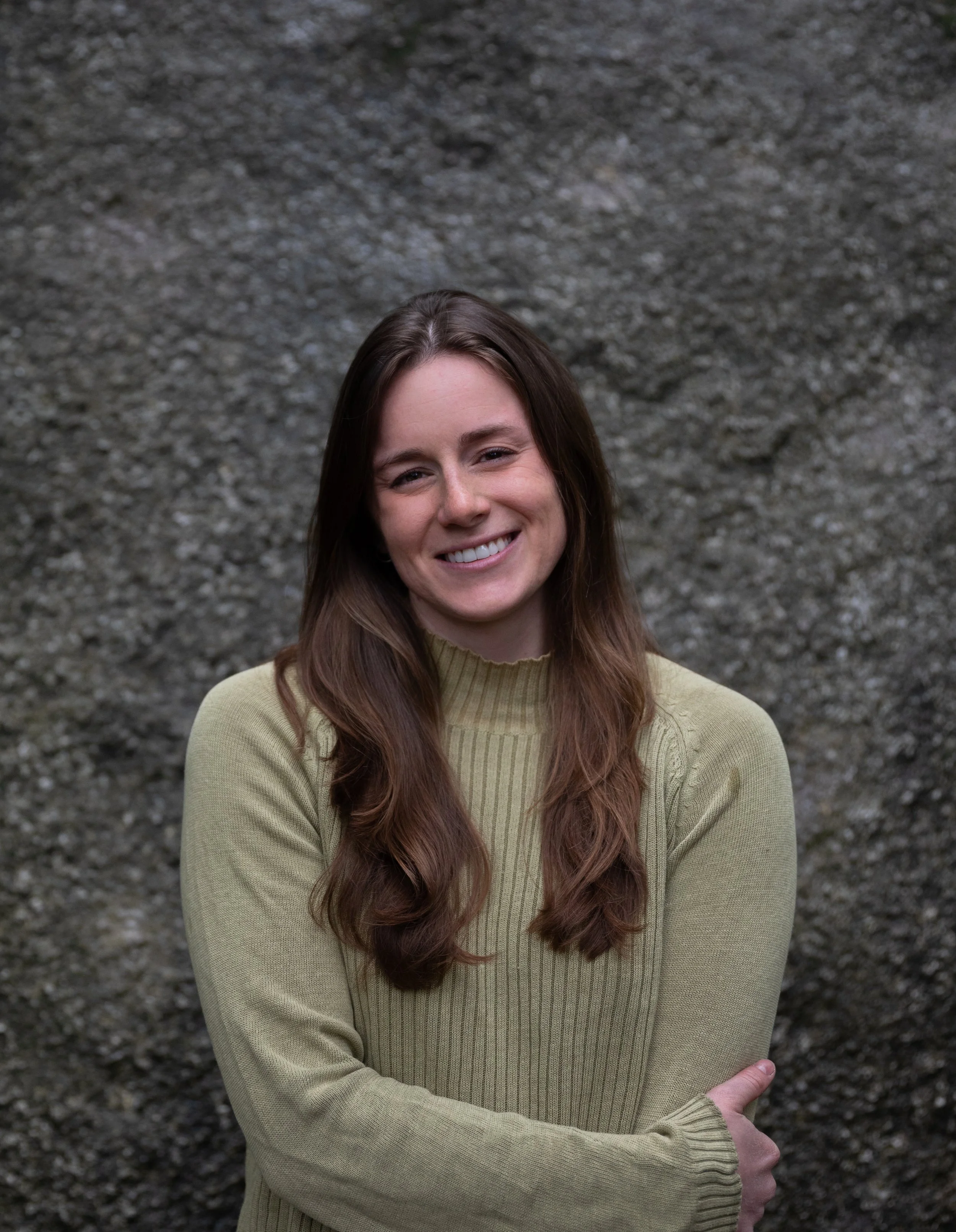
Hi, I’m maria berno
RCC | MA
I’m a Registered Clinical Counsellor (RCC) with the BC Association of Clinical Counsellors (BCACC), with a Master of Arts in Counselling Psychology and a Bachelor of Science in Behavioural Neuroscience.
Today, I practise in Whistler and Pemberton, and virtually across British Columbia. My approach to counselling is grounded in the belief that you are more than the problem that brings you through the door. I take a holistic, humanistic approach that emphasizes curiosity, self-understanding, compassion, and the idea that you already carry many of the resources you need, we’re just working together to uncover them.
Ultimately, I believe therapy should feel human. You don’t have to show up with everything figured out, and you certainly don’t need to have your life perfectly together. You just need to show up as you are.
My Approach
I’m a Registered Clinical Counsellor and hold a Master’s in Counselling Psychology and a Bachelor’s degree in Behavioural Neuroscience. My background allows me to bring a grounded, empathetic, and client-centred approach to counselling, while drawing from evidence-informed practices and current research.
I take an integrative and holistic approach, drawing from Internal Family Systems (IFS) and other parts-based approaches, Narrative Therapy, Cognitive Behavioural Therapy (CBT) and Interpersonal Neurobiology. I believe therapy should be tailored to you, not the other way around. Your culture, identity, relationships, experiences, and the context of your life are all important parts of understanding what you’re going through.
I’m particularly interested in helping people develop dialouge for their internal experiences. Sometimes simply being able to name and understand what is happening inside us can create a little more space, clarity, and choice. Together, we can build practical, personalized tools that feel useful beyond the therapy room.
My role is to walk alongside you, sometimes zooming in on what feels immediate and difficult, and other times zooming out to explore the broader patterns, relationships, experiences, and influences that may be shaping your life. Sometimes working with different parts of you so that things feel easier to work with or simply geeking out on some neuroscience to help us understand why something is happening.
Above all, I aim to create a warm, non-judgmental space where you can show up as you are. My hope is that our work together helps you feel more understood, connected to yourself, and equipped with the insight and tools to navigate life with greater clarity, confidence, and resilience.
training & Qualifications
I believe that ongoing learning is an important part of being a thoughtful and effective counsellor. I’m committed to continually expanding my knowledge and skills through additional training, professional development, and consultation with my supervisor and colleagues.
RCC Registered Clinical Counsellor - BCACC
MA Masters of Arts, Counselling Psychology - Yorkville University
BSc Bachelor of Science, Behavioural Neuroscience - University of British Columbia
Additional Trainings
Positive Neuroplasticity Training
Culturally Adapted CBT - CAMH
Complex Trauma Certification Training (CCTP / CCTP II)- PESI Canada
Supporting Survivors of Sexual Assault - Ending Violence Association of BC
Foundations in Violence Against Women 2.0 – BCSTH
Legal Issues Supporting Women and Children Experiencing Violence 2.0 - BCSTH
ASSIST Mental Health First Aid - Mental Health Commission of Canada
Gender Diversity/ 2LGBTQAI+ Awareness Training - Trans Care BC
Supporting Women with Mental Wellness and Substance Use Needs - BCSTH
Crisis Prevention & De-escalation Training
Intimate Partner Violence Safety Planning - Ending Violence Association of BC
Increasing Access for Indigenous Women 2.0 - BCSTH
Indigenous Awareness Training - University of Alberta
Trauma Informed Practice Foundations - Canadian Police Knowledge Network
Interagency Case Assessment Training (ICAT) - Ending Violence Association of BC

Outside of the office…
Outside of counselling, I’m usually doing something that involves being in nature, making something with my hands, or enthusiastically overcommitting to a new hobby.
I run a small pottery studio from home and love rock climbing, skiing, biking, aerial silks, and surfing when I can. I also inherited a serious green thumb and can frequently be found gardening until dark, obsessing over my dahlias, collecting shiny rocks, or enthusiastically kissing my dog.
I completed my yoga teacher training in 2017 after life delivered one too many plot twists. While I no longer teach, these practices remain part of my own life and help me stay grounded, present, and regulated, qualities I value bringing into the counselling space.
I share these things because I am also just a human, and humans value connection.
how did i get here?
Before becoming a counsellor, I spent several years working as an initial attack wildfire firefighter, travelling by helicopter into remote areas of British Columbia as part of a small, close-knit crew. Working in high-stress and unpredictable environments gave me a firsthand understanding of resilience, burnout, trauma, and the ways our experiences can shape how we navigate life.
Throughout this time, I became increasingly interested in mental health and often found myself supporting colleagues through the challenges that can come with high-stress work. This experience ultimately led me to pursue a career in mental health.
Following my firefighting career, I transitioned into the non-profit sector, where I spent several years supporting survivors of trauma and gender-based violence. Working one-on-one with clients deepened my understanding of trauma-informed care and reinforced my belief in the importance of creating spaces where people feel safe, heard, and supported.
trauma informed
-
Trauma informed refers to integrating knowledge about how people are affected by trauma into my practice.
To me, this means working with clients' unique situations that emphasizes safety, trust, choice, connection, skill building, and self care through collaboration with you.
-
Our nervous system is constantly taking in information about whether we feel safe, threatened, connected, or overwhelmed. When we experience trauma or prolonged stress, our nervous system can become more sensitive to perceived danger. This can influence how we respond to situations, relationships, conflict, and even our own thoughts and emotions.
You might notice this as:
Fight: anger, irritability, defensiveness, feeling the need to take control
Flight: anxiety, overthinking, restlessness, perfectionism, difficulty slowing down
Freeze: feeling stuck, overwhelmed, disconnected, or unable to act
Shutdown: numbness, exhaustion, dissociation, or wanting to withdraw
Fawn: people-pleasing, difficulty setting boundaries, or prioritizing others' needs over your own
These responses aren't signs that you're broken. They are often learned protective responses that made sense in the context of what you've experienced.
-
The Window of Tolerance describes the range in which we’re able to manage emotions, stress, and everyday challenges while staying regulated and connected to ourselves.
Trauma and chronic stress can narrow this window, making it easier to become hyperaroused—feeling anxious, panicked, angry, or on high alert—or hypoaroused—feeling numb, disconnected, shut down, or dissociated.
A trauma-informed approach helps us understand these responses as nervous system adaptations rather than something being “wrong” with you. In counselling, we can build awareness of these patterns and develop tools for grounding, regulation, and creating a greater sense of safety and choice.
-
In counselling, we can become curious about the connection between your mind, body, emotions, and nervous system. For example, rather than only asking “Why am I reacting this way?”, we might also explore:
“What is happening in my body right now?”
“What does my nervous system think is happening?”
“What do I need to feel more grounded or connected?”This can help us recognize patterns earlier and develop tools that support regulation, self-awareness, and choice.
I believe this lens is particularly valuable because it allows us to understand your responses within the context of your experiences, rather than pathologizing them. Sometimes the goal isn't to eliminate difficult emotions or reactions, but to build enough safety and capacity that you have more choice in how you respond.
This can include grounding and somatic practices, developing awareness of your Window of Tolerance, exploring protective “parts,” building emotional language, and understanding the patterns that have developed throughout your life.
Your nervous system is part of your story, but it doesn't have to dictate the rest of it.